In the realm of in-process inspection, where precision and reliability are of utmost importance, random sampling emerges as a cornerstone methodology. As an in-process inspection supplier, I have witnessed firsthand the profound impact that random sampling can have on the quality control process. In this blog post, I will delve into the significance of random sampling in in-process inspection, exploring its benefits, and providing real-world examples to illustrate its practical applications.
Understanding Random Sampling
Random sampling is a statistical technique used to select a subset of items from a larger population in such a way that each item in the population has an equal chance of being selected. This method ensures that the sample is representative of the entire population, allowing for accurate inferences to be made about the quality of the products being inspected. In the context of in-process inspection, random sampling is used to monitor the quality of products at various stages of the production process, helping to identify and address any issues before they escalate into major problems.
Benefits of Random Sampling in In-Process Inspection
One of the primary benefits of random sampling in in-process inspection is its ability to provide a cost-effective and efficient way to monitor product quality. By inspecting a representative sample of products rather than every single item, companies can save time and resources without sacrificing the accuracy of their quality control measures. This is particularly important in industries where production volumes are high and where the cost of inspecting every product would be prohibitively expensive.


Another significant advantage of random sampling is its ability to detect quality issues early in the production process. By regularly inspecting a random sample of products, companies can identify any trends or patterns that may indicate a potential problem. This allows them to take corrective action immediately, preventing defective products from reaching the market and minimizing the risk of customer complaints and returns.
Random sampling also helps to ensure the fairness and objectivity of the inspection process. Since each item in the population has an equal chance of being selected, there is no bias or favoritism in the selection process. This helps to build trust and confidence among customers, suppliers, and other stakeholders, demonstrating that the company is committed to maintaining high standards of quality control.
Real-World Applications of Random Sampling in In-Process Inspection
To illustrate the practical applications of random sampling in in-process inspection, let's consider a few examples from different industries.
Fan Inspection [/product-inspection/fan-inspection.html]
In the manufacturing of fans, random sampling can be used to monitor the quality of the blades, motors, and other components. By inspecting a random sample of fans at various stages of the production process, manufacturers can ensure that the products meet the required specifications and performance standards. This helps to prevent issues such as vibration, noise, and reduced airflow, which can have a significant impact on the customer experience.
Lithium Battery Inspection [/product-inspection/lithium-battery-inspection.html]
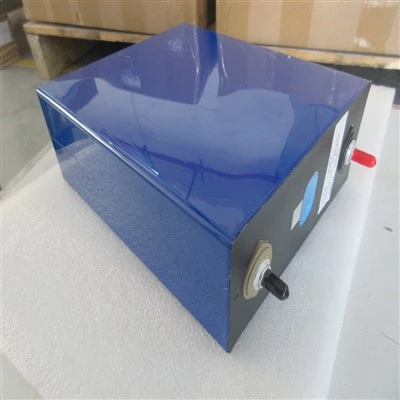
In the production of lithium batteries, random sampling is crucial for ensuring the safety and reliability of the products. By inspecting a random sample of batteries for factors such as capacity, voltage, and temperature, manufacturers can identify any potential defects or safety hazards. This helps to prevent issues such as overheating, short circuits, and explosions, which can pose a serious risk to consumers.
Lawn Mower Inspection [/product-inspection/lawn-mower-inspection.html]
In the manufacturing of lawn mowers, random sampling can be used to assess the quality of the engine, cutting blades, and other components. By inspecting a random sample of lawn mowers at different stages of the production process, manufacturers can ensure that the products are safe, reliable, and perform to the required standards. This helps to prevent issues such as engine failure, blade damage, and poor cutting performance, which can lead to customer dissatisfaction and costly repairs.
Knife Inspection [/product-inspection/knife-inspection.html]
In the production of knives, random sampling is essential for ensuring the sharpness, durability, and safety of the products. By inspecting a random sample of knives for factors such as blade quality, edge retention, and handle stability, manufacturers can identify any potential defects or quality issues. This helps to prevent issues such as dull blades, blade breakage, and handle loosening, which can pose a risk to users.
Production Pre-Shipment Inspection [/product-inspection/production-pre-shipment-inspection.html]
Random sampling is also commonly used in production pre-shipment inspections to ensure that the products meet the customer's specifications and requirements before they are shipped. By inspecting a random sample of products from the final production batch, companies can verify that the products are free from defects, damage, and other quality issues. This helps to prevent costly returns and rework, as well as to maintain a positive reputation with customers.
Implementing Random Sampling in In-Process Inspection
To effectively implement random sampling in in-process inspection, it is important to follow a few key steps. First, it is essential to define the population of products that will be inspected. This may include all products produced during a specific time period, all products from a particular production line, or all products of a certain type or model.
Next, it is necessary to determine the sample size. The sample size will depend on a variety of factors, including the size of the population, the level of confidence desired, and the acceptable margin of error. There are several statistical formulas and tables available that can be used to calculate the appropriate sample size for a given situation.
Once the sample size has been determined, the next step is to select the sample randomly. This can be done using a variety of methods, such as random number generators, lottery systems, or systematic sampling. It is important to ensure that the selection process is truly random and that each item in the population has an equal chance of being selected.
After the sample has been selected, the products in the sample should be inspected using the appropriate inspection methods and criteria. The inspection results should be recorded and analyzed to determine whether the products meet the required specifications and standards. If any issues are identified, corrective action should be taken immediately to address them.
Conclusion
In conclusion, random sampling plays a vital role in in-process inspection, providing a cost-effective, efficient, and objective way to monitor product quality. By using random sampling, companies can detect quality issues early in the production process, prevent defective products from reaching the market, and ensure the fairness and objectivity of the inspection process. As an in-process inspection supplier, I highly recommend the use of random sampling as a key component of any comprehensive quality control program.
If you are interested in learning more about how random sampling can benefit your in-process inspection needs, or if you would like to discuss your specific requirements with our team of experts, please feel free to reach out to us for a consultation. We are committed to providing high-quality inspection services that meet the unique needs of our customers and help them to achieve their quality goals.
References
- Montgomery, D. C. (2017). Introduction to Statistical Quality Control. Wiley.
- ISO 2859-1:1999. Sampling procedures for inspection by attributes - Part 1: Sampling schemes indexed by acceptance quality limit (AQL) for lot-by-lot inspection.
- ASTM E105-08(2014). Standard Practice for Probability Sampling of Materials.