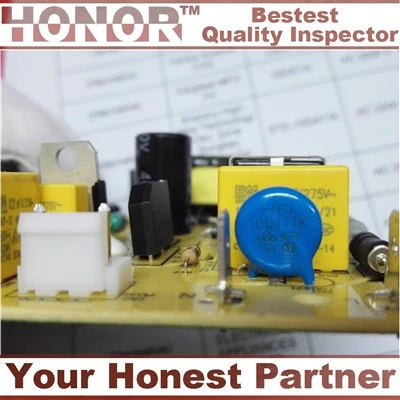
In today's highly competitive market, product quality is the cornerstone of a company's success. As a leading in - line inspection supplier, I've seen firsthand how in - line inspection can revolutionize product quality. Let's dive into how this process works and why it's a game - changer for businesses.
What is In - line Inspection?
In - line inspection is a real - time quality control process that takes place during the manufacturing process. Instead of waiting until the end of the production line to check the products, in - line inspection systems are integrated directly into the production process. This allows for immediate detection of any defects or issues as they occur.
One of the key advantages of in - line inspection is its speed. Traditional inspection methods often involve taking samples from the production line and testing them in a laboratory. This can be time - consuming, and by the time the results come back, a large number of defective products might have already been produced. With in - line inspection, problems are identified right away, and corrective actions can be taken immediately.
How In - line Inspection Improves Product Quality
1. Early Defect Detection
In - line inspection systems are equipped with advanced sensors and cameras that can detect even the smallest defects. For example, in the manufacturing of electronic components, a single micro - crack in a circuit board can lead to product failure. In - line inspection can quickly identify these flaws before they turn into major issues. As soon as a defect is detected, the production line can be adjusted or the defective product can be removed, preventing it from being incorporated into the final product.
2. Consistency in Production
Consistency is crucial for product quality. In - line inspection helps maintain a high level of consistency by continuously monitoring the production process. It can measure various parameters such as dimensions, color, and surface finish, ensuring that every product meets the specified standards. For instance, in the production of toys, in - line inspection can ensure that each toy has the same color, shape, and size. You can learn more about Toy Inspection here.
3. Reduction of Waste
When defects are detected early, it reduces the amount of wasted materials and resources. If a defective product is allowed to continue through the production process, it may require additional processing or even be scrapped at the end. In - line inspection minimizes this waste by catching problems early on. For example, in the manufacturing of fans, if an in - line inspection system detects a misaligned blade, the blade can be adjusted immediately, saving the cost of a new fan assembly. Check out Fan Inspection for more details.
4. Process Optimization
In - line inspection provides valuable data about the production process. By analyzing this data, manufacturers can identify areas where the process can be improved. For example, if the inspection system detects a high number of defects at a particular stage of production, it may indicate a problem with the machinery or the manufacturing method. This data - driven approach allows for continuous improvement of the production process, leading to higher - quality products.
5. Compliance with Standards
Many industries have strict quality and safety standards that products must meet. In - line inspection helps ensure that products comply with these standards. For example, in the laptop manufacturing industry, products need to meet specific electromagnetic compatibility (EMC) and safety standards. In - line inspection can test for these parameters during the production process, ensuring that each laptop meets the requirements. Read more about Laptop Inspection.
Real - world Applications
Let's take a look at some real - world examples where in - line inspection has made a significant impact on product quality:
Food Industry
In the food industry, in - line inspection is used to ensure the safety and quality of food products. It can detect foreign objects such as metal, glass, or plastic in the food. For example, an in - line metal detector can be installed at the end of a food production line to check for any metal contaminants. This not only protects consumers from potential harm but also helps food manufacturers avoid costly recalls.
Automotive Industry
In the automotive industry, in - line inspection is used to check the quality of various components. For example, engines are inspected for dimensional accuracy, surface finish, and the presence of any defects. This ensures that each engine meets the high - performance and safety standards of the automotive industry. Additionally, in - line inspection is used during the assembly process to ensure that all parts are correctly installed.
The Role of Our In - line Inspection Solutions
As an in - line inspection supplier, we offer a range of cutting - edge inspection systems that are tailored to the specific needs of different industries. Our systems are equipped with the latest technology, such as high - resolution cameras, advanced sensors, and intelligent software, to provide accurate and reliable inspection results.


We understand that every business is unique, and we work closely with our clients to develop customized inspection solutions. Whether it's a small - scale operation or a large - scale manufacturing plant, our in - line inspection systems can be integrated seamlessly into the production process.
We also provide comprehensive after - sales support, including installation, training, and maintenance. Our team of experts is always on hand to assist our clients with any issues they may encounter, ensuring that their in - line inspection systems run smoothly and efficiently.
Why Choose In - line Inspection?
When it comes to product quality, in - line inspection offers several advantages over traditional inspection methods. Firstly, it saves time and money. By detecting defects early, it reduces the cost of rework and waste. Secondly, it improves customer satisfaction. High - quality products lead to happy customers, which in turn leads to repeat business and a good reputation.
Another benefit is that in - line inspection provides real - time feedback. This allows manufacturers to make immediate adjustments to the production process, ensuring that the quality of the products remains consistent.
If you're involved in container loading, in - line inspection can also be combined with Container Loading Supervision to ensure that only high - quality products are shipped.
Production Full Inspection: A Complementary Approach
In addition to in - line inspection, we also offer Production Full Inspection. While in - line inspection focuses on real - time monitoring during the production process, production full inspection is a more comprehensive inspection carried out at the end of the production run. This can be used to double - check the quality of the products and to ensure that they meet all the specified requirements.
Conclusion
In - line inspection is a powerful tool for improving product quality. It offers early defect detection, consistency in production, waste reduction, process optimization, and compliance with standards. As an in - line inspection supplier, we're committed to helping businesses achieve higher product quality and greater success in the market.
If you're in the process of sourcing products and looking to improve the quality control of your production, we'd love to talk. Get in touch with us to discuss how our in - line inspection solutions can be tailored to your needs.
References
- "Quality Control in Manufacturing", John Wiley & Sons, Inc.
- "Automated Inspection Systems: Theory and Application", CRC Press