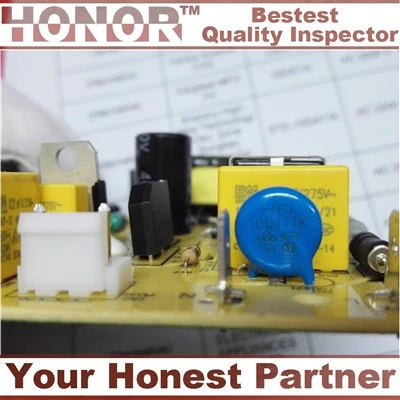
Hey folks, let's cut to the chase – if you're a factory manager, quality lead, or just someone deep in the supply chain grind, you've probably asked yourself this at least once: Is in-process inspection mandatory for every single industry I work in? I've been in the game as an in-process inspection supplier for over a decade now, and let me tell you, the answer isn't a one-size-fits-all yes… but it's way closer to yes than you might think. And before you tune out thinking "that's just sales talk," let's break this down with real, messy examples from the industries I've worked with, plus why skipping that step almost always blows up in your face.
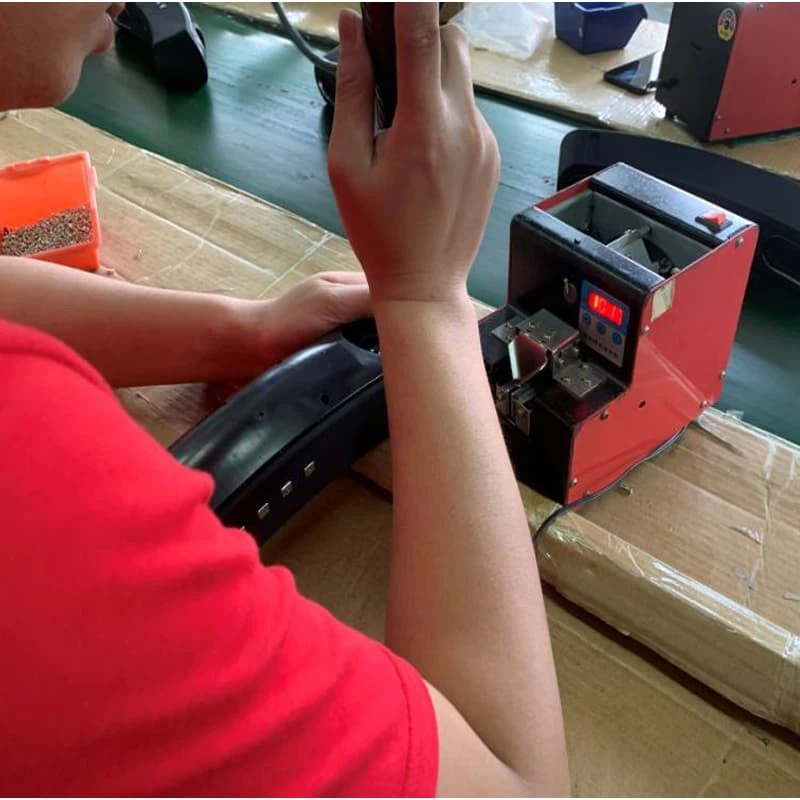
First off, let's get clear on what in-process inspection actually is, because I see a lot of people mixing it up with final line checks. Final inspection is that last hurdle before shipping – you test the whole product, box it up, send it out. In-process? That's the checks you do mid-production, right when a batch of parts is being made, a line of products is coming off the assembly floor, or a coating is curing. It's like catching a mistake when it's still a tiny glitch on a single widget, not when you've wasted 10,000 hours and $50k on a bad final product that no retailer will take. If you want the full rundown on how we structure this for different workflows, check out our In-process Inspection page – it's got case studies from everyone from auto parts makers to small appliance factories.
Now, let's talk industries that flat-out can't skip this step. Let's start with automotive, aerospace, and medical device manufacturing – the ones where a faulty part doesn't just cost you money, it hurts people. I worked with a small aerospace component maker a couple years back who thought they could skip mid-production checks to save cash. They were making tiny titanium fasteners for jet engines, and one batch had a tiny, almost invisible stress crack that only showed up when the fastener was torqued to 150% of its rated load. By the time they caught it at final inspection, they'd made 2,000 of them, and recalls almost grounded a regional airline. That's the kind of mess that makes execs go back to their teams and demand in-process checks for everything fastener-related – no exceptions. Speaking of which, if you work with fasteners (and honestly, who doesn't?), our Fastener Inspection services check for stress cracks, thread pitch, and coating adhesion right as each batch rolls off the forging line, so you don't end up eating a recall.
Medical devices are another non-negotiable. Think about it: a faulty insulin pump component, a pacemaker wire, or a sterile surgical tool – those aren't things you can "fix" at final. The FDA's strict guidelines don't just recommend in-process inspection; they mandate it for Class III devices, which are the ones that keep people alive. I've had clients in that space tell me that skipping a single mid-production check can lead to automatic non-compliance, fines that run into six figures, and being shut down until you prove your quality process is solid. So yeah, for medical, aerospace, automotive – it's not just mandatory, it's non-negotiable.
But wait, what about the industries that people assume don't need it? Like, say, consumer goods – tile, laptops, light bulbs, that sort of thing. Do they really need in-process checks? I used to think that too, until I worked with a tile company that thought they could skip mid-production checks and just fix broken tiles at the end. Let me tell you, ceramic tile manufacturing has a lot of variables: kiln temperature, raw material consistency, glaze thickness. One time, that tile company got a batch where 30% of the tiles had a glaze layer that was too thin, so when a customer mopped their floor, the stain soaked right through. Final inspection would've caught it, but they'd already shipped 50,000 tiles to big box stores, which returned every single one and cost them $120k in restocking fees and lost shelf space. Now they do Tile Inspection mid-kiln and mid-glaze, so they catch bad tiles before they even go into boxes. That's a $120k mistake they don't make twice.
Laptops are another one. A client of mine in Shenzhen was cranking out budget laptops for a major global brand, and they thought mid-production checks for screen assembly were a waste of time. Turns out, when their LCD panel supplier had a glitch, 20% of the panels were dead pixels that only showed up after the laptop was fully assembled – not when the panels were being tested before installation. By the time they caught it at final, they'd already installed 10,000 bad panels into laptops, and the brand's return rate spiked to 18% (the industry average is 5%). They had to pay to replace all those laptops, offer customers discounts, and lose their top supplier status. Now they do Laptop Inspection at three mid-production stages: panel testing before assembly, keyboard fit after assembly, and packaging integrity before shipping. No more sudden, catastrophic return spikes.
Lighting products? Same story. I worked with a LED bulb maker who thought in-process checks for diode placement were unnecessary. Turns out, a misaligned diode can cause the bulb to burn out in 100 hours instead of the advertised 50,000. They shipped 100,000 bulbs to Amazon, and within a month, 25% were underperforming. Amazon flagged them for quality issues, and their seller rating dropped to 3.2, which meant almost no one saw their product anymore. Now they do Light Inspection right after diode soldering, so they catch misalignments before the bulbs are sealed. They've cut their early failure rate by 85% and got their seller rating back up to 4.7.
But wait, are there any industries where in-process inspection isn't mandatory? Let's be real – small-batch, low-risk products with super simple supply chains. Like, if you're a local craft baker making bread for a neighborhood café, your in-process checks are "did I add the right yeast? Is the dough proofing properly?" That's way less formal, and it's not enforced by any regulatory body. Or if you're a tiny custom furniture maker building one table at a time for local clients, you can do all your checks at the end. But even then, I've seen custom makers skip mid-checks and end up with a wobbly table leg they had to redo, which cost them time and money. For small, low-risk stuff, it's more of a best practice than a mandatory rule, but even then, it's a time and money saver.
Now, let's address the pushback I hear all the time: "In-process inspection slows down my line. It adds cost. I can't afford it." Yeah, I get it – production lines run on tight schedules, and every second you spend checking a part is a second it's not moving down the line. But here's the math no one tells you: The cost of a mistake at final is 5 to 10 times higher than fixing it mid-production. Let's use that tile example: A bad tile costs $0.50 to make, and $5 to replace at final. If you catch it mid-production, you scrap it for $0.50. If you catch it at final, you scrap the whole box (100 tiles) for $50, or if it gets to the customer, you pay $10 per tile in return and restocking costs. So skipping mid-inspection might save you $0.50 per tile, but if you get a bad batch, it'll cost you $50 per tile. That's not a win – that's a gamble most businesses can't afford.
Also, mandatory doesn't always mean "enforced by a government agency." A lot of big retailers and brands have their own in-process rules for their suppliers. Walmart, Target, Amazon – they all require suppliers to do mid-production checks for consumer goods, and if you can't show proof of that, they drop you. That's not a choice anymore – if you want to work with major brands, you need in-process inspection. The same goes for auto suppliers who work with Ford or Toyota – their quality standards mandate mid-line checks for every component. So even if your industry doesn't have a federal mandate, your customers probably do.
I'll wrap this up with a quick story that stuck with me last year. We had a client in the toy industry (another big one for in-process checks, by the way – small parts are a choking hazard) who thought they could skip mid-production checks for plastic toy cars. They had a batch where the plastic windows were too small, so when kids played with the cars, the windows would pop out. They caught it at final, but not before they'd shipped 50,000 units. They had to do a full recall, which cost them $200k, and lost a major toy retailer contract. Now they do in-process checks every 1,000 units on toy dimensions, small parts, and paint safety. That recall was a wake-up call – they're still in business, but they'd rather spend $1k a month on in-process checks than another $200k on a mistake.
So to answer the original question: For industries where human safety, regulatory compliance, or major customer standards are on the line – yes, in-process inspection is mandatory. For small, low-risk, custom operations, it's not mandatory, but it's still a smart move to avoid costly mistakes. And for every industry in between? It's not just a good idea – it's how you keep your production running smoothly, your customers happy, and your profits in the black.
If you're tired of last-minute recalls, sky-high return rates, or quality issues killing your customer relationships, we can tailor an in-process inspection plan for your specific line – whether you're making fasteners, laptops, tile, or anything in between. Hit us up to chat through your needs, no pressure, no weird fine print.

References:
- U.S. Food and Drug Administration. (2022). Quality System Regulation (21 CFR Part 820) for Medical Devices.
- Automotive Industry Action Group. (2021). In-Process Inspection Guidelines for Automotive Component Manufacturing.
- Amazon Seller Central. (2023). Quality Performance Requirements for Consumer Electronics and Home Goods.
- Ceramic Tile Institute of America. (2022). Quality Control Standards for Commercial Tile Production.
- Consumer Product Safety Commission. (2023). Small Part Safety Standards for Children's Products.