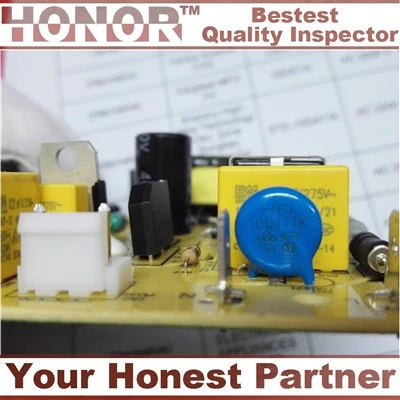
Hey there! If you're a brand owner or importer working with overseas factories, you've probably heard the term "Pre-Production Inspection (PPI)" thrown around, and you might be wondering: what even gets checked in this step? I run a PPI supplier, and let me tell you-this isn't just a casual once-over. PPI is the first big guardrail to make sure your upcoming order doesn't go off the rails before factory production even starts, so we don't waste time, money, or materials fixing mistakes later.
First off, let's get one thing clear: PPI isn't for checking finished products (that's Final Random Inspection, FRI). It happens when the factory has 10-25% of the raw materials or components needed for your order on hand, so we're zeroing in on the building blocks of your product-because if those are bad, everything built from them will be too. I've seen too many clients skip this and end up with a container full of broken fridges or wonky scooters because a batch of raw plastic was defective. So what exactly do we inspect here? Let's break it down, and I'll tie in some common product examples so it's not just jargon.
First up: Raw Materials and Core Components. This is the bread and butter of PPI, honestly. We're not just looking at a sample of plastic pellets or aluminum sheets-we're checking that they match exactly what you specified on your order form. If you wrote "food-grade ABS plastic" for a refrigerator, we'll test a chunk to make sure it doesn't leach weird chemicals, not just take the factory's word for it. Wait, speaking of fridges, if you need specifics on that, check out our Refrigerator Inspection page-we deep-dive into every material check we do for those. For smaller stuff, like headphones, the core components are the speaker drivers, batteries, and charging ports. If the factory tried to swap in cheaper, lower-quality drivers to cut costs, we'll catch that before production starts. For laptops, it's the CPU, RAM, battery cells, and the display panels-super important, because a $5 display panel defect here turns into a $1000 laptop full of problems later. Scooters rely on things like the motor, tire rubber, and brake hardware-we once had a client whose factory tried to use cheap, non-slip tire rubber that would have caused accidents; we caught it in PPI, saved them a ton of liability. Even something like a shower unit-core components are the showerhead nozzle materials, the brass valves, and the hoses. If those are made from low-grade metal, they'll corrode in 6 months, so we check the material thickness and corrosion resistance in PPI.
Next: Component Compatibility and Assembly Feasibility. Wait, that's a fancy way of saying "do all these parts actually work together when we put them together?" A lot of factories will get individual parts that fit on paper, but in real life, they're slightly off-like a headphone charging port that's a millimeter too narrow for the USB-C cable you specified. In PPI, we don't just check parts separately; we watch the factory do a test assembly of 5-10 units. For example, when we do a Laptop Inspection, we'll watch them put together the screen, motherboard, and chassis to make sure the screws line up, the display connects without glitchy lines, and the battery fits snugly without sticking out. For scooters, that means checking that the motor attaches to the frame correctly, the handlebars line up straight, and the brake levers connect to the calipers without gaps. We once had a scooter client whose factory had the wheel mounting holes drilled 2mm off-center-we spotted it in test assembly, so they could re-drill the holes before mass production, instead of throwing out every scooter that had wonky wheels. For showers, this means checking that the showerhead connects to the pipe thread correctly, the mixing valve fits the wall mount, and the hose doesn't kink when pulled out. Compatibility checks also include functional tests-like, for headphones, we'll make sure the drivers pair with a phone, play audio without static, and the volume control works. For refrigerators, we'll test the compressor's basic function, but wait-refrigerators have more specific checks, so the Refrigerator Inspection page has all the details on that, since they're regulated for safety too.
Then there's Safety and Regulatory Compliance-this is the part that makes or breaks a product getting into the market. If your product doesn't meet local safety standards, you can't sell it, no matter how good it looks. For example, in the US, laptops need to meet UL standards for electrical safety, so in PPI, we'll check that the power adapters have the right certifications, the battery cells don't have any dents or defects that could cause fires. For headphones, we'll check that the cord isn't frayed (even in test batches) and the battery isn't a cheap uncertified one that could overheat. For scooters, this is huge-we check that the frame is made of high-tensile steel (not flimsy cheap metal), the brakes meet minimum stopping distance requirements, and the wheel locks work properly. We once had a scooter client who almost got a shipment detained at US customs because their factory used uncertified lithium batteries-we caught it in PPI, so they had the factory swap them out before production. For showers, safety checks are about water pressure resistance, no leaking valves (which can cause water damage), and if it's an electric shower, that it's grounded correctly. Oh, and if you need a breakdown of shower-specific checks, our Shower Inspection page covers all that regulatory stuff. Also, safety isn't just about regulations-it's about preventing defects that hurt customers; like, a refrigerator's door seal being the wrong size would let cold air out, wasting energy and causing food to spoil, but that's also a safety thing if food goes bad and makes someone sick.
Wait, another big one: Documentation and Process Verification. A lot of people forget this, but PPI isn't just about physical stuff-it's about how the factory is running their production to avoid mistakes. We check that the factory has written specifications for every part, so every worker knows exactly what materials to use. We also check their quality control procedures-do they have a plan to check parts before assembly, or are they just hoping for the best? For example, when we do a Headphone Inspection, we'll ask to see their QC checklist for speaker drivers, and make sure they're actually testing a sample of drivers instead of just taking the factory's "they're good" word. For laptops, we check that their testing process for motherboards is documented-like, do they test for short circuits before assembling the whole unit? For raw materials, we check that the factory has certificates of conformity for the plastics, metals, and other parts, so we know they're not cutting corners. Documentation also includes things like packaging instructions-wait, do you remember when you asked for eco-friendly packaging, and the factory said they'd do it but didn't? In PPI, we check a sample of packaging to make sure it matches what you specified, so you don't get boxes full of cheap plastic packaging that makes your brand look bad.


Now, I know what some of you are thinking: "Is PPI really worth it? I can just do a final inspection." Let me tell you a quick story. A client came to me last year who skipped PPI for a scooter order. When we did their final inspection, we found that 30% of the scooters had faulty wiring that would have caused fires. But wait-since PPI never happened, the factory had already built 500 scooters, and they refused to fix them because "we built them to your specs." The client lost $20,000 in materials and had to pay for a recall. If we had done PPI, we would have caught the wiring defect when they were just making the first 10 units, and the factory would have fixed it for free, no recall needed. That's why PPI is non-negotiable for me as a supplier-it's the cheapest way to avoid costly mistakes.
But here's the thing: every product is different, so the exact equipment checked in PPI changes a lot. Small electronics (like headphones) have different components than large appliances (like refrigerators), which are different from leisure products (like scooters) or plumbing fixtures (like showers). That's why we have specific pages for each product: Refrigerator Inspection, Headphone Inspection, Laptop Inspection, Scooter Inspection, Shower Inspection-each one breaks down exactly what we check for that product specifically, so you know what to expect.
If you're a brand owner or importer who's tired of dealing with production mistakes, liability issues, or lost money from bad orders, we can help. We work with factories around the world to do thorough, reliable PPIs that catch issues early, before they turn into big problems. Whether you're shipping refrigerators, headphones, laptops, scooters, showers, or anything else, our team has the expertise to make sure your pre-production process is solid. Don't wait until you have a container full of defective products-reach out to us to talk about your needs and get a customized PPI plan for your order.
References
- International Organization for Standardization (ISO). (2022). General Principles of Product Inspection for Pre-Production Stages. ISO 10360-1:2022, Geneva, Switzerland.
- U.S. Consumer Product Safety Commission (CPSC). (2023). Pre-Production Safety Inspection Guidelines for Consumer Electronics and Appliances. CPSC 520-603, Washington, D.C.
- Global Apparel and Footwear Association (GAFA). (2021). Pre-Production Component Verification for Hard Goods. GAFA Technical Bulletin 19, New York, NY.
- European Committee for Standardization (CEN). (2022). Pre-Production Inspection Protocols for Plumbing and Sanitary Ware. EN 817:2022, Brussels, Belgium.