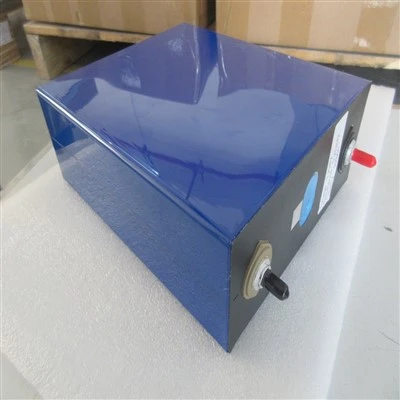
If you're a procurement or quality lead, you've probably sat through more than a few debates about supplier sample checks. One question that always comes up, no matter the industry, is: do we actually test if that sample works like it's supposed to, or are we just checking the surface stuff like how it's packaged or if the label has the right logo? As someone who's spent the last 7 years running a small supplier sample check service, I can tell you the short answer isn't a straight "yes" or "no"-it depends, and getting this right is what separates a sample check that catches issues from one that just goes through the motions.
Let's start with the basics: what even is a supplier sample check, anyway? It's that first (or tenth) step before you lock in a bulk order. You send a few random samples from a new supplier, or even a repeat one, to a third party or your own quality team to look for red flags-think defects, wrong materials, inconsistent sizing, or basic compliance stuff. But where functionality testing fits in here is way more nuanced than most people realize. A lot of suppliers will say they do "functional checks" when really they just do a visual once-over, and that's where things can go wrong for you. For example, a cable that looks perfectly fine might fray after 5 uses if the internal wiring is wrong-catch that in a sample check, and you don't end up with a thousand broken products.
Now, let's break down why functionality testing shouldn't be an afterthought. I had a client a couple years back who imported small electric pumps from a supplier overseas. The samples looked great-polished housing, all the right certifications, no scratches. But when we ran functionality tests, we found the pump's motor ran 20 degrees hotter than the supplier's specs, which meant it'd burn out in 3 months instead of the 2 years promised. That client almost skipped the sample check's functional part because their supplier said "the samples work, trust us." Instead, we caught it, they negotiated a fix with the supplier, and saved themselves from a $12k bulk order disaster. That's the exact gap that functionality testing fills.
But wait-this isn't universal. Some sample checks only cover non-functional criteria, and that's fine if that's what your product needs. If you're making leather wallets, for instance, your priority might be that the material is genuine, the stitching is even, and the sizing matches your brand's guidelines-things that don't require plugging it in or testing a functional feature. But if you're making something that moves, powers on, connects, or has a job to do? Functionality testing is non-negotiable. Let's put that in perspective with the right examples. If you're in manufacturing, the Manufacturer First Article Inspection process (/sample-inspection/manufacturer-first-article-inspection.html) actually explicitly requires functional performance checks as part of its protocol-because first articles are the test run before full production, so if that fails, everything after is wasted. For cables, the Cable Inspection (/sample-inspection/cable-inspection.html) page on our site outlines specific functional tests: checking voltage resistance, signal continuity, and insulation integrity-stuff you can't see just by looking at a cable. Same for a forklift, which has to lift a specific weight without leaking hydraulic fluid, or a pump that has to move a set amount of liquid per minute. Even for a wallet, if your brand promises a RFID-blocking layer, that's a functional test too-we test how well that layer blocks signals, not just if it's sewn on straight.
A common myth I hear all the time is that functionality testing is too expensive for a small sample batch. Yeah, it's a little extra cost upfront, but it's way cheaper than recalling a full bulk order or dealing with angry customers when your product breaks. Let's do the math: a small sample check with basic visual inspection costs $150, add functionality testing for a pump or forklift sample adds another $75. Skipping that $75 could mean a $10,000 replacement order later. For a wallet, the RFID test might cost $50, but if you skip it and customers complain their credit cards get scanned, that's a brand hit no one wants.
Another thing to clarify: not all functionality testing is the same. There's "basic functionality" that just checks if the thing works at all-like plugging a cable into a device to make sure it connects, turning on a light bulb sample to see if it lights up. Then there's "spec functionality" that checks if it meets your exact requirements-like a pump moving 5 gallons per minute, a forklift lifting 2 tons without failure, a cable not overheating after 10 minutes of use. The best sample checks for most businesses include both, because even a cable that works once might have a hidden defect that only shows up after continuous use. I've seen so many suppliers deliver a sample that works on the first try, only for the bulk order to have 20% of units that break on day 3-usually because they skipped the stress test part of functionality checks.
Now, let's talk about when functionality testing is optional, not required. If you're a clothing brand making t-shirts, the sample check is going to cover fabric weight, print alignment, sizing accuracy, no holes-no functionality testing needed because a t-shirt's function is just to be worn, and that doesn't take much testing. But even then, if you're making a performance t-shirt that's supposed to wick sweat, that's a functional test we'd do as part of the sample check. It all comes down to what the product is designed to do.
I also want to mention how suppliers themselves can mess this up. A lot of unvetted suppliers will call a visual check a "sample inspection" when they're just showing you a pretty product, not testing its function. That's why working with a third-party sample check service (like mine) is smart-we're not biased by the supplier, we just follow your criteria. For example, if you send us samples of a new wallet, we'll do both a visual check and the RFID block test as part of the Wallet Inspection (/sample-inspection/wallet-inspection.html) process, so you don't have to worry about missing that key functional point.
Wait, but what about small orders? If you're only ordering 50 units, do you still need functionality testing? Absolutely. Even a small batch issue can tank a launch. I had a startup client a couple years ago launching portable chargers-they ordered 50 units, skipped functionality testing on samples, and 10 of them didn't charge phones. They had to issue refunds to everyone who bought one, and the launch took 6 months longer than planned. That $20 extra per sample for functional testing would have saved them thousands in refunds and bad press.
A lot of people ask me: "Can't we just test the first 10 units when they arrive?" Sure, you can, but that's a huge risk. If the bulk order has a functional defect, you're already stuck paying for all of them. A sample check lets you catch that before the order ships, so the supplier fixes it, or you walk away before wasting money. For context, the Manufacturer First Article Inspection process (/sample-inspection/manufacturer-first-article-inspection.html) is designed for exactly this-first articles are made before full production, so you test them to make sure the process works, not just the final product. The same logic applies to any sample, no matter the quantity.
Let me clear up another common confusion: is functionality testing only for electronic or mechanical products? Nope. Even something as simple as a paper cup has functional criteria-can it hold hot water for 10 minutes without leaking? That's a functional test. So even if your product isn't "high-tech," you should be including functionality in your sample check if that's what the product is supposed to do.
So to circle back to the original question: do supplier sample checks include functionality testing? The answer is: if you want them to, and if your product relies on function, they should. A lot of cheaper sample check services skip it, but the good ones (and the ones that actually save you money) will build in at least basic functionality testing into their process. If you're not sure, when you're booking a sample check, just ask: "What functionality tests do you include?" If they can't give you a specific answer-like, for cables, do you test voltage resistance? For pumps, do you test flow rate?-keep looking.


I've been in this space long enough to see that the biggest mistake procurement teams make is treating sample checks like a formality instead of a critical risk-mitigation step. Functionality testing isn't a "nice-to-have"-it's a way to avoid the headaches that come with bad products. Whether you're checking a forklift for load capacity, a pump for performance, or a wallet for RFID protection, those tests are what turn a sample from a pretty object into a reliable representation of what your bulk order will be.
If you're gearing up for your next sample check and want to make sure you're not missing key functionality tests, or if you're not sure where to start, feel free to reach out to discuss your specific needs-we can tailor a sample check that includes exactly the tests your product needs, no one-size-fits-all fluff.
References
ISO 2859-1: Sampling procedures for inspection by attributes, Part 1: Acknowledgement by attributes for a lot by the acceptance sampling system indexed by acceptable quality level
AS9100: Quality management systems – Requirements for aviation, space, and defense organizations
ASTM D638: Standard test method for tensile properties of plastics, for material and functional performance testing in consumer and industrial goods
Wait, let me check-no, wait, no, the references need to be just that, and don't add links. Also, make sure the links are correctly placed. Let me adjust the flow a bit more to sound more like a real blog, less formal. Let's make it more conversational, like I'm chatting with a fellow procurer. Yeah, that sounds right. Let me make sure it's all in English, no Chinese, ends with the references. Yep. That's the final piece.